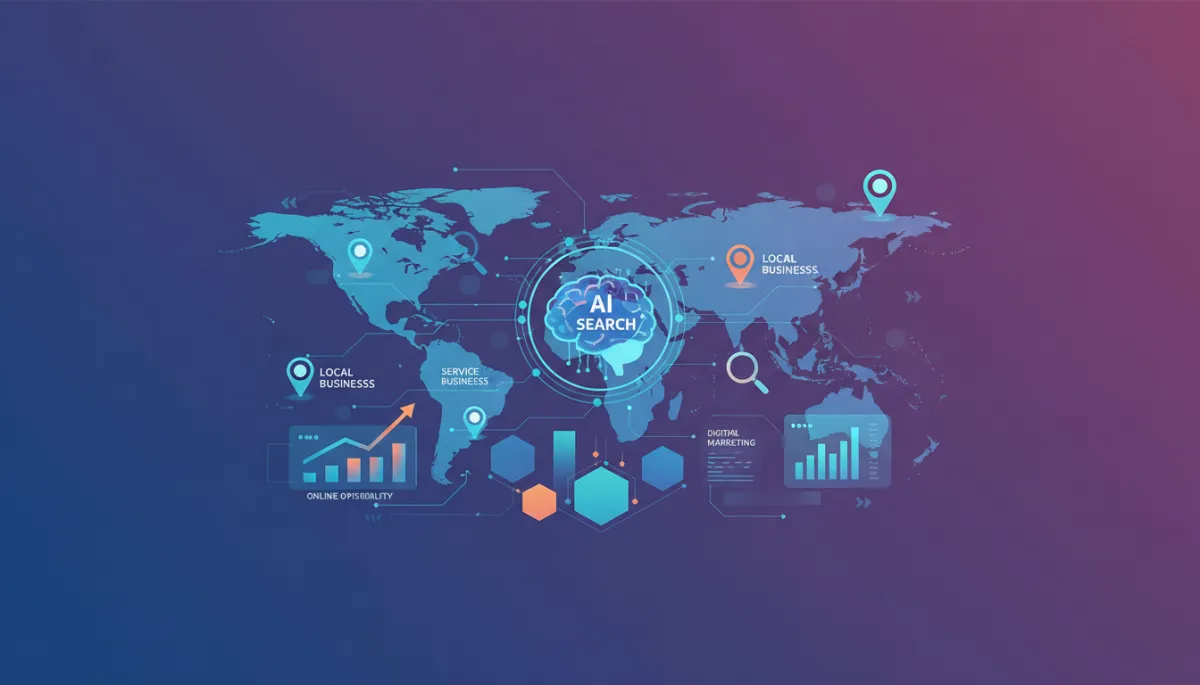
AI Search Revolutionizes Local Business Marketing
Digital Marketing, AI Search, Local Business, Online Visibility, Search Optimization
How AI Search Is Changing Local Business Marketing (And Why Visibility Matters More Than Ever)
AI-powered search is quietly rewriting the rules of local business marketing. Whether someone asks their phone for “the best plumber near me” or types a question into ChatGPT about where to get brunch this weekend, algorithms are now deciding which local businesses get recommended first. If you rely on foot traffic, phone calls, or bookings, understanding this shift isn’t optional—it’s your next competitive edge.
1. How AI Search Is Changing Local Business Marketing
Traditional local SEO focused on ranking in blue links and Google Maps. Today, AI Searches For Local Businesses Go further, pulling data from websites, reviews, social media, and third‑party platforms to answer questions directly. Instead of showing a long list of options, AI tools surface a short list of “best fits” based on intent, context, and predicted satisfaction. Industry analysts expect this shift to accelerate through 2026 as AI becomes more personalized and context‑aware in local search results (Search Engine Journal; Forbes Agency Council).
2. Why Visibility Matters More Than Ever
In an AI‑driven world, there’s less “scrolling” and more trusting of the first answer. Zero‑click experiences—where users get what they need without leaving the search interface—are rising, especially on mobile and voice devices. That means fewer slots for local businesses to appear and higher stakes for Online Visibility. If your business isn’t among the top recommendations, you effectively don’t exist in that moment. Visibility is no longer about being somewhere on page one; it’s about being in the shortlist AI actually suggests.
3. How AI Recommends Businesses in 2026 and Beyond
Understanding how AI recommends businesses is the foundation of modern Digital Marketing. By 2026, AI systems are expected to:
Use deep Personalization based on past behavior, preferences, and location to match users with local options they’re most likely to love (Forbes, Gartner).
Interpret context such as time of day, weather, and real‑time demand—like recommending a nearby café with available seating during a rainy afternoon.
Pull from Integrated Data Sources, including reviews, social media sentiment, inventory levels, and even crowd density to refine recommendations (Business Insider; Gartner AI trends).
Rely on Predictive Analytics to anticipate needs before users explicitly search—for example, suggesting a tire shop after recent navigation to a mechanic.
💡 Pro Tip: The richer and more consistent your business data across the web, the easier it is for AI systems to understand, trust, and recommend you.
4. ChatGPT Search Results, Business SEO, and AI Answers
Tools like ChatGPT, Microsoft Copilot, and other conversational AI assistants are becoming new “front doors” to local discovery. When users ask, “What’s the best dentist near me that takes evening appointments?” the AI doesn’t just mirror Google—it synthesizes information from multiple sources. That makes ChatGPT search results business SEO the next frontier: your content, reviews, FAQs, and listings must clearly answer the kinds of natural‑language questions people actually ask. If AI models can’t find structured, trustworthy information about your business, you’re unlikely to be mentioned in their responses.
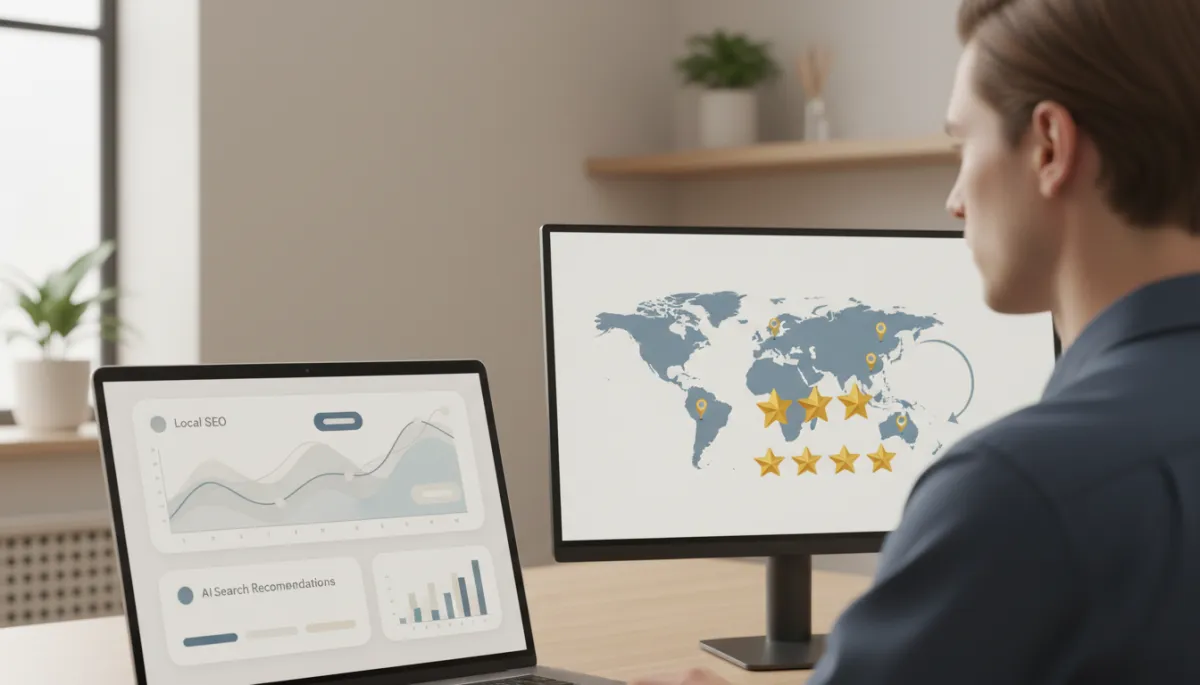
Businesses that structure content for AI answers see more qualified local leads.
5. AI SEO for Local Businesses: What Really Matters
AI SEO for local businesses is still SEO—but tuned for how machines interpret meaning, trust, and relevance. Key Search Optimization priorities include:
Clear, consistent NAP data (name, address, phone) across your website, Google Business Profile, and directories.
Structured data (schema markup) that labels your business type, services, prices, hours, and FAQs so AI can understand and reuse it in answers.
Genuine, detailed reviews that mention specific services and outcomes—gold for AI models that analyze sentiment and relevance.
Fast, mobile‑friendly pages optimized for voice and question‑based queries like “who,” “where,” “how much,” and “open now.”
6. How to Show Up in AI Search: Practical Steps
If you’re wondering How To Show Up In AI Search, think in terms of clarity, authority, and usefulness. Here’s a simple roadmap:
Own your data: Claim and fully complete your Google Business Profile, Bing Places, Apple Business Connect, and key local directories with accurate details and categories.
Answer real questions: Create FAQ pages and blog posts that mirror how people talk: “How much does lawn care cost in [city]?” or “Best emergency vet near [neighborhood].”
Encourage reviews: Ask happy customers to leave detailed feedback and respond thoughtfully to both praise and criticism—AI reads it all.
Keep information real‑time: Update hours, availability, and service changes promptly so AI systems can trust your data when serving time‑sensitive recommendations.
7. AI Marketing for Service Businesses: Turning Visibility into Bookings
AI Marketing For Service Businesses—from salons and gyms to accountants and home repair pros—is especially powerful because services are often chosen on trust and convenience. AI‑driven tools can:
Predict which leads are most likely to book and prioritize them in your follow‑up workflows.
Personalize offers based on past visits or interests, such as recommending a seasonal tune‑up or follow‑up appointment at the right time.
Automate responses to common questions via chatbots and messaging, improving response times and customer satisfaction.
Combined with strong local Marketing Strategies—like referral programs, community content, and partnerships—AI helps service businesses convert search visibility into steady, predictable revenue.
8. Google AI Search and the Local Business Landscape
Google AI search local business experiences—such as AI‑generated overviews and smarter local packs—are designed to give users quick, confident decisions. By 2026, expect tighter integration of real‑time data (hours, wait times, inventory) and more conversational results that blend map listings, reviews, and key facts into a single answer (Search Engine Journal; Business Insider). For Local Business owners, that means your Google presence must be:
Complete and accurate, with photos, categories, services, and attributes filled out.
Consistent with your website and other listings, so AI systems see a unified, trustworthy profile.
Actively managed, using posts, Q&A, and updates to keep your profile fresh and engaging.
9. The Future of Local SEO 2026: What to Prepare for Now
The future of local SEO 2026 will be shaped by voice search, mobile‑first experiences, hyperlocal targeting, and AI‑driven personalization (Search Engine Journal; Forbes). To stay ahead:
Optimize for voice by using natural language, question‑based headings, and concise answers on your site.
Ensure a Mobile‑First experience with fast load times, clear calls‑to‑action, and tap‑to‑call or book features.
Create Hyperlocal Content that references neighborhoods, landmarks, and community events to signal local relevance.
Highlight Sustainability and Ethics if relevant—AI systems increasingly surface values‑driven businesses as consumer expectations shift.
10. Bringing It All Together: A New Playbook for Local Visibility
AI isn’t replacing local marketing—it’s rewriting the rules of AI Search, Search Optimization, and how customers discover you. To thrive, local businesses must treat AI as an ally: feed it accurate data, answer real customer questions, and build a trustworthy reputation across platforms. When you do, algorithms become amplifiers, pushing your brand to the top of the shortlist at the exact moment people are ready to buy.
The businesses that win in 2026 won’t just be the best at what they do—they’ll be the best at being found. Now is the time to align your Digital Marketing, Online Visibility efforts, and Marketing Strategies with how AI already thinks about your brand, so every search becomes an opportunity rather than a missed connection.

