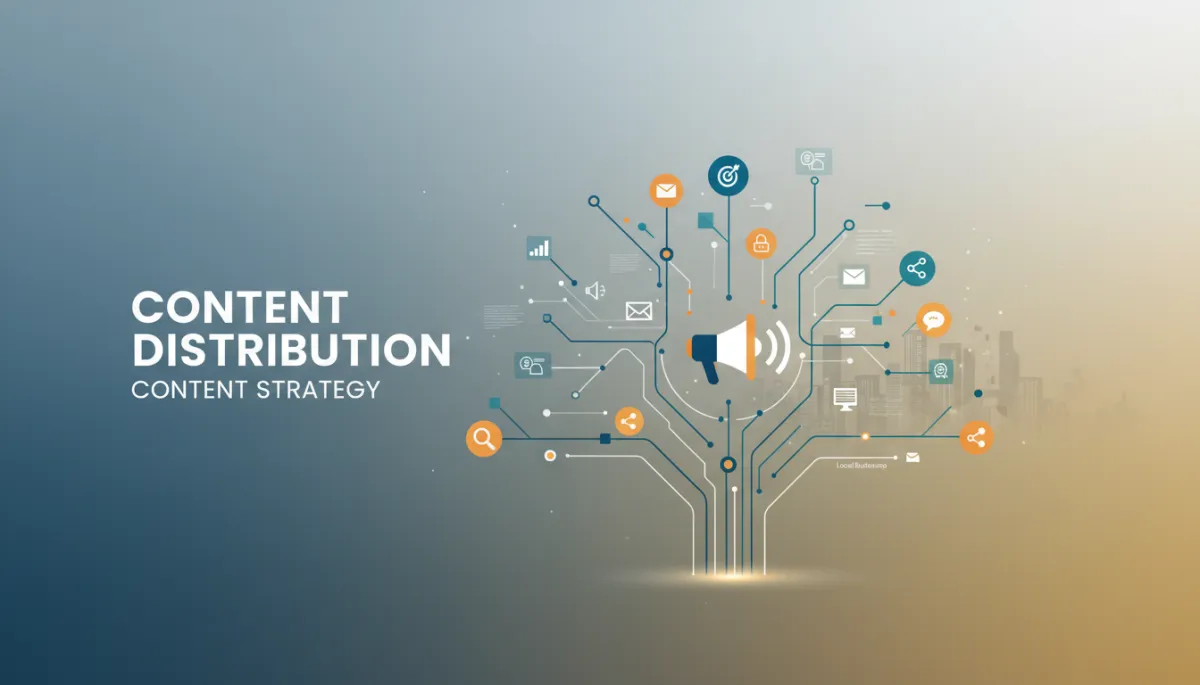
Master Content Distribution for Business Success
Content Distribution, Business Marketing, Digital Marketing
What Is Content Distribution and Why Most Businesses Are Missing It
You spend time and money creating blogs, social posts, videos, maybe even a newsletter. But if almost no one sees them, your content isn’t a marketing asset—it’s a hidden expense. That’s where content distribution comes in, and it’s the piece of content strategy most local businesses quietly overlook.
What Is Content Distribution?
Content distribution is the process of getting your existing content in front of the right people, in the right places, at the right time. It’s not about creating more; it’s about sharing smarter.
Think of it this way: creating content is like printing flyers for your business. Content distribution is everything you do to actually hand those flyers to people—posting on social media, sending email campaigns, optimizing for search, running ads, or partnering with local organizations. Without distribution, your content just sits in a stack on the counter, gathering dust instead of customers.
💡 Simple definition: Content distribution is how you deliver your content to your ideal audience so it can actually drive audience engagement and sales.
The Three Main Types of Content Distribution Channels
For local businesses, understanding your main distribution options is a powerful first step in improving your business marketing and digital marketing results.
Owned channels – Places you control, such as your website, blog, Google Business Profile, email list, and physical location (posters, QR codes, in-store screens).
Earned channels – When others share your content: local bloggers, community groups, customer reviews, press coverage, or people resharing your posts on social media.
Paid channels – Ads on Facebook, Instagram, Google, or local media that promote your content to a targeted audience instead of pushing only “buy now” offers.
A smart content strategy uses a mix of these channels so that each new piece of content travels further and works harder for your business.
Why Most Businesses Are Missing Content Distribution
Many local business owners are already overwhelmed. They’re juggling staff, inventory, customers, and finances. So when it comes to digital marketing, the pattern often looks like this:
Someone says, “You should post more on social media.”
The business creates a few posts or a blog article.
It goes live once… and that’s the end of it.
No follow-up, no re-posting, no email, no boosting, no repurposing. Then they conclude, “Content marketing doesn’t work for us.”
1. Confusing Creation with Strategy
Most local businesses equate content with posts: “We posted about our sale; we’re doing content.” In reality, that’s only one small part of a full content strategy. Without a plan for content distribution, you’re only doing half the job.
2. Underestimating the Noise Online
Your customers scroll past hundreds of posts every day. Algorithms on platforms like Facebook and Instagram show your content to only a fraction of your followers. If you post once and walk away, you’re relying on luck instead of a deliberate business marketing plan.
3. Thinking Distribution Is “Too Salesy”
Many owners worry that sending emails or re-sharing content feels pushy. But valuable content—tips, how-tos, local guides, behind the scenes—actually improves audience engagement. People appreciate helpful information, especially when it’s clearly local and relevant to their lives.
4. No System, Just Random Acts of Marketing
Without a simple system, content gets created when someone has time, not when your audience is listening. Posts are forgotten after a day. Emails go out only when there’s a sale. This inconsistency makes it nearly impossible to build momentum, trust, or steady audience engagement.
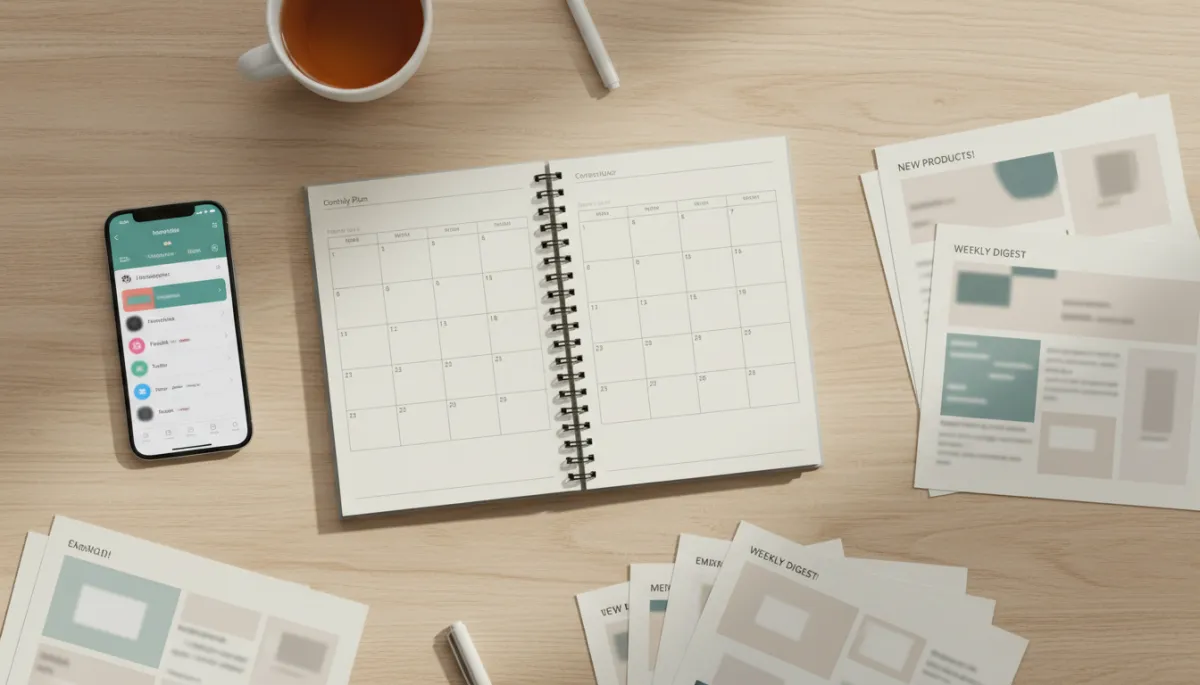
A simple content calendar turns random posts into a repeatable marketing system.
Why Content Distribution Matters Even More for Local Businesses
Big brands can afford to waste content. They have national budgets and huge teams. Local businesses don’t. Every blog post, video, or guide you create is an investment. Content distribution ensures you squeeze every drop of value from that investment.
It keeps your business visible between visits, so customers don’t forget you when they finally need your service.
It positions you as the local expert, not just another option on a search results page.
It helps you compete with larger chains that might have more ad dollars but less authentic local presence.
📌 Key takeaway: For local businesses, smart content distribution can be the difference between being “that place I’ve heard of” and “the only place I’d go.”
Practical Content Distribution Ideas for Local Businesses
1. Turn One Piece of Content into Many Touchpoints
Suppose you write a blog post called “5 Questions to Ask Before Hiring a Local Plumber.” Here’s how you could distribute it:
Post the full article on your website for digital marketing and SEO.
Share a short summary with a link on Facebook, Instagram, and Nextdoor, tailored to your local neighborhood.
Record a quick video where you talk through the five questions and post it to Reels or TikTok.
Send the blog to your email list with a subject line like “Read this before your next plumbing emergency.”
Turn the five questions into a printable checklist you keep at your counter or attach as a PDF to quotes.
That’s one idea, multiplied across several content distribution channels, all working together to build audience engagement and trust.
2. Use Local Partnerships as Distribution
Other local businesses and organizations already have the attention of your ideal customers. Include them in your content strategy:
Offer to write a short guest article for a neighborhood association newsletter in exchange for a link to your website.
Share each other’s helpful posts on social media, not just promotions but genuinely useful local content.
Collaborate on a local guide—“Where to Eat Before the Game,” “Best Weekend Activities for Families”—and distribute it through all your channels.
3. Make Email the Backbone of Your Distribution
Social media algorithms change constantly, but your email list is an asset you control. For local businesses, email is still one of the most effective business marketing tools for consistent audience engagement.
Collect emails at the register, on your website, and through online booking forms.
Send a short, useful email at least once a month featuring one piece of content: a tip, a how-to, or a local story—not just discounts.
Link back to your website to boost traffic and help your local SEO.
Building a Simple Content Distribution Routine (In Under 1 Hour a Week)
You don’t need a full-time marketing team to benefit from content distribution. Start with a simple routine:
Pick one core piece of content per month – a blog post, a video, or a how-to guide that answers a real customer question.
Create three short versions – a social post, an email intro, and a quick in-store script or flyer referencing it.
Schedule distribution – use free or low-cost tools to schedule social posts and emails over the month, instead of posting everything at once.
Watch for engagement – notice which topics get more clicks, replies, or conversations in store, and create more content like that.
💡 Pro Tip: Consistency beats perfection. A simple, repeatable content distribution habit will outperform a burst of random posts every time.
Turning Visibility into Real Audience Engagement and Sales
The goal of digital marketing isn’t just views; it’s relationships. Audience engagement happens when people don’t just see your content—they respond to it, remember it, and act on it. Effective content distribution makes that possible by repeatedly putting helpful, recognizable messages in front of your ideal local customers.
Over time, they start to think of you as:
The café that always shares great local events.
The salon that explains how to care for your hair between visits.
The contractor who posts honest before-and-after stories and maintenance tips.
When they finally need what you offer, your business is already top of mind. That is the real power of pairing strong content with intentional content distribution.
Final Thoughts: Don’t Just Create—Distribute
Most local businesses aren’t failing at content—they’re failing at distribution. They’re putting effort into posts, blogs, and videos, but stopping just short of the step that actually drives business marketing results. By making content distribution a non-negotiable part of your content strategy, you turn scattered efforts into a focused system that grows visibility, trust, and revenue.
You don’t need more content. You need more people to see, share, and act on the content you already have. Start with one piece, one routine, and one month. Your future customers are already online—make sure your best content actually reaches them.

