Dominate Local SEO & AI Search: 3-Part Strategy
Local Marketing, SEO, AI Search, Service Businesses
The 3-Part Visibility Strategy Local Businesses Can Use to Dominate Google and AI Search
In 2026, the most desirable local brands will not be the ones with the loudest ads, but the ones that appear effortlessly, everywhere your ideal customer looks. This is your blueprint for a refined, three-part local business visibility strategy designed to help you dominate both Google and the new era of AI-powered search—without shouting, discounting, or chasing every trend.
Your 3-Part Visibility Strategy at a Glance:
📌 Quick Summary: This article outlines a three-part framework to help premium local service businesses dominate Google and AI search:
1. Foundation – Local SEO & Google Presence: Perfect your website, Google Business Profile, and local listings. Focus on NAP consistency, location-rich pages, and a fast, mobile-first site, so Google and AI clearly know who you are, where you are, and what you do.
2. Authority – Reputation, Content & Social Proof: Build a curated review profile, publish localized high-value content, and use social/influencer collaborations to signal trust and expertise. This makes you the obvious, top-rated choice in both human and AI-generated recommendations.
3. Intelligence – AI Search Visibility & Personalization: Structure content to answer real questions clearly, embrace AI-powered personalization and chatbots, and selectively explore emerging experiences like AR and voice. The goal is to be featured in AI summaries and to nurture visitors with tailored, premium-feeling digital touchpoints.
When these three layers work together, your brand becomes highly visible, trusted, and preferred—so ideal clients arrive pre-sold, ready to invest in your services.
Why Visibility Is the New Luxury for Local Businesses
For discerning local customers, the buying journey now begins long before they step through your door. It starts with a whisper to a voice assistant, a quick “near me” search, or a question typed into an AI tool: “What’s the best [your service] in this area?” If your brand does not appear in those curated answers, you are invisible—no matter how exceptional your service is in person.
The local business marketing strategy for 2026 is no longer just about ranking in blue links. It’s about owning the conversation across Google, Maps, voice search, and AI assistants that summarize, compare, and recommend. Your online presence must feel as polished and intentional as your physical space. That is where a structured, three-part local business visibility strategy becomes your competitive advantage.
📌 Key Takeaway: In a world of AI-driven recommendations, visibility is not noise—it is curated authority. The brands that win are the ones AI trusts enough to showcase first.
The 3-Part Visibility Strategy: An Overview
To understand how local businesses dominate Google and AI search in 2026 and beyond, think of your visibility as a three-tiered experience:
Foundation: Precision Local SEO and Google Presence – the essentials that tell Google and AI who you are, where you are, and why you matter locally.
Authority: Reputation, Content, and Community Signals – the proof that real people trust you, talk about you, and choose you over alternatives.
Intelligence: AI Search Visibility Strategy – the refinement layer that makes your brand the obvious choice for AI-powered answers and recommendations.
Together, these three elements form a service business visibility strategy that is elegant, sustainable, and designed to attract higher-value local clients—not just more clicks.
Part 1: Foundation – A Precise Google Visibility Strategy for Local Businesses
Think of your Google presence as your digital storefront on the most exclusive street in town. It must be immaculate, consistent, and unmistakably yours. A sophisticated Google visibility strategy for a local business starts with three core assets: your website, your Google Business Profile, and your local listings across the web.
1.1 Local SEO: The Non-Negotiable Essentials
According to Moz, local SEO success in 2026 still hinges on accurate business information, optimized Google profiles, and strong local signals. At a luxury level, this means more than just filling in the basics—it means curating every detail with intention as part of your local SEO strategy for service businesses.
Perfect your NAP consistency. Your name, address, and phone number must match across your website, Google Business Profile, maps, and directories. Inconsistencies create friction and erode trust with search engines and AI models that rely on clean data.
Craft location-rich pages. Create dedicated, elegantly written pages for each neighborhood or city you serve. Use phrases like “interior designer in [city]” or “boutique dental practice near [landmark]” naturally to signal relevance to “near me” searches.
Design for mobile luxury. A slow, clumsy mobile site is the digital equivalent of a cluttered lobby. Google’s mobile-first approach means your site should load quickly, feel intuitive, and visually reflect the premium experience you deliver offline.
1.2 Your Google Business Profile: The New Front Desk
Search Engine Journal calls Google Business Profile optimization “crucial” for local SEO—and in 2026, it is also crucial for AI search. When AI tools look for trustworthy information about your brand, they often start here. Treat this profile like your concierge desk:
Use high-quality, professionally shot photos that reflect your space, your team, and your clientele’s lifestyle.
Curate categories and services carefully so Google understands exactly what you do and who you serve.
Post regular updates—events, seasonal offers, behind-the-scenes moments—to keep your profile active and algorithmically favored.
💡 Pro Tip: Treat your Google Business Profile like a living digital brochure. Refresh photos quarterly and update descriptions as your services evolve.
1.3 Voice and “Near Me” Optimization: Meeting Customers in the Moment
With more customers asking their phones and smart speakers for recommendations, your local business marketing strategy for 2026 must anticipate natural, spoken queries. That means:
Answering common questions in simple, concise language on your website and FAQs (“How much does a luxury facial cost in [city]?”).
Including conversational phrases and long-tail keywords that mirror how people actually speak when they search.
This foundational layer ensures you are not just present, but perfectly positioned when someone nearby is ready to buy.
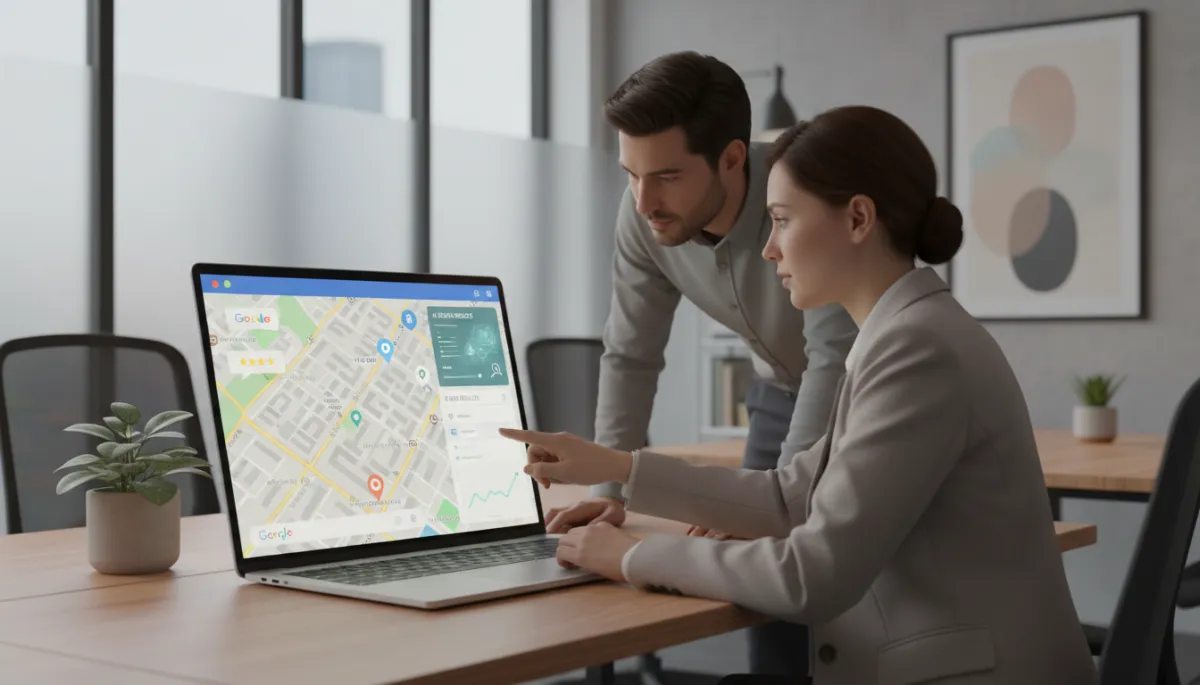
A polished local SEO foundation turns casual searches into high-intent appointments.
Part 2: Authority – Reputation and Content That AI Loves to Recommend
Once your foundation is in place, the next step is to build undeniable authority. This is where how to get more local customers online becomes less about chasing traffic and more about becoming the obvious, trusted choice. Google, AI assistants, and human customers are all looking for the same thing: proof that you consistently deliver an exceptional experience.
2.1 Reviews as Social Proof and Ranking Power
BrightLocal’s research shows that reviews are a significant factor in local search rankings—and in 2026, they are equally important for AI systems that summarize “top-rated” options. For a premium service business visibility strategy, your review profile should feel curated, not chaotic.
Invite reviews at natural high points in the client journey: after a successful project, a glowing compliment, or a repeat visit.
Respond to every review—positive or negative—with the grace and attentiveness of a five-star concierge.
Highlight specific services, locations, and outcomes in your responses to reinforce key local and service-based keywords.
This disciplined approach not only lifts your rankings, but it also gives AI clear, structured signals about what you do best and whom you serve.
2.2 Localized Content: Owning the Conversation in Your Area
Forbes highlights content and personalization as central to the future of local marketing. A refined local business visibility strategy does not rely on generic blog posts—it creates content that feels tailored to your city’s lifestyle and your clients’ expectations.
Publish guides such as “How to Choose a Luxury [Service] in [City]” or “The Ultimate [Neighborhood] Home Upgrade Checklist” to answer high-intent local questions.
Share stories from your community—features on local partners, event recaps, or case studies of clients in iconic neighborhoods.
This is where content marketing and local SEO strategy for service businesses intersect. Every article, video, or social post should reinforce your expertise and your roots in the community you serve.
2.3 Social and Influencer Signals: Extending Your Local Aura
Business News Daily notes that social media remains essential for local growth. In a luxury context, social is not about volume; it is about aesthetic, alignment, and authority. Your presence should feel like a curated gallery, not a crowded bulletin board.
Collaborate with local influencers who share your brand values and audience, whether that is wellness, design, or high-end lifestyle.
Use geo-tagging, local hashtags, and location-based campaigns to reinforce your connection to specific neighborhoods and cities.
These authority signals feed back into how Google and AI evaluate your brand, strengthening your position when someone asks for “the best” in your category.
Part 3: Intelligence – Your AI Search Visibility Strategy for 2026
The final layer of this three-part framework is where truly forward-thinking brands separate themselves. An elegant AI search visibility strategy ensures you are not just visible in traditional results, but also featured in AI-generated summaries, recommendation lists, and voice answers that clients increasingly rely on to make decisions.
3.1 Structuring Information for AI: Clarity Over Cleverness
AI systems thrive on clarity, consistency, and structure. Search Engine Journal notes that AI is reshaping SEO by rewarding content that directly and helpfully answers user questions. To adapt your local business marketing strategy for AI in 2026:
Use clear headings and FAQs on your site that mirror real questions your clients ask, like “What is the best time to book a [service] in [city]?”
Provide concise, well-structured answers that AI can easily quote or summarize in featured responses.
The goal is simple: when someone asks an AI tool for local recommendations, your brand is the one it can confidently and consistently reference.
3.2 AI-Powered Personalization and Remarketing
Forbes and BrightLocal both emphasize the rise of AI-driven personalization. For a premium local brand, this is an opportunity to elevate every digital touchpoint. Instead of generic follow-ups, your marketing becomes tailored, timely, and tastefully restrained.
Use AI tools to segment your audience by neighborhood, service interest, and visit history, then deliver bespoke offers or content that feel crafted just for them.
Implement smart chatbots that answer questions instantly, book appointments, and gently guide visitors to the right service—without feeling robotic or pushy.
This smart layer strengthens your local business visibility by ensuring that, once someone finds you, they receive the same level of care they would in person.
3.3 Emerging Experiences: AR, Voice, and Beyond
Looking ahead, the most distinctive local brands will experiment with technologies that transform how people experience services before they buy. Forbes points to augmented reality and immersive experiences as key trends by 2026. Imagine:
A design studio offering virtual previews of a remodeled space through AR, directly from a search result.
A luxury spa allowing clients to explore treatment rooms via a guided virtual tour before booking.
These experiences not only delight clients; they also generate engagement signals and content that Google and AI can index, further reinforcing your authority and visibility.
📌 Key Takeaway: Your AI search visibility strategy is not about chasing every new tool. It is about choosing the technologies that best showcase your high-end service experience.
Bringing It All Together: A Cohesive Service Business Visibility Strategy
When you combine foundation, authority, and intelligence, you create more than just a marketing plan—you create a digital ecosystem that works quietly, consistently, and elegantly on your behalf. This is how refined local brands answer the question of how local businesses dominate Google and AI search without resorting to aggressive tactics or race-to-the-bottom pricing.
A Simple Checklist for 2026 and Beyond
Foundation: Is your website fast, mobile-perfect, and locally optimized? Is your Google Business Profile complete, current, and visually aligned with your brand? Are your listings consistent across the web?
Authority: Do you have a steady stream of thoughtful reviews? Are you publishing localized, high-value content? Are you visible and intentional on the social platforms your ideal clients actually use?
Intelligence: Are you structuring content for AI, answering real questions clearly, and experimenting with tools that enhance personalization and discovery?
If you can answer “yes” to each of these, you are not just visible—you are memorable, trusted, and preferred. That is the true measure of a luxury-level local business visibility strategy.
From Search to Signature Clients: Your Next Step
The purpose of this three-part framework is to turn digital visibility into real-world relationships with the right clients. When your Google visibility strategy for local businesses is executed with care, the clients who find you online arrive pre-sold. They have read your reviews, explored your content, and seen your brand recommended by both Google and AI tools. They already understand your value—and are willing to invest in it.
Whether you run a boutique law firm, a private dental practice, a high-end salon, or a bespoke home service, this is the moment to refine how you show up online. A thoughtful local SEO strategy for service businesses is no longer optional; it is the baseline. Layer on authority and AI intelligence, and you move from competing on price to commanding preference.
💡 Pro Tip: Start with one part of the framework—often your Google foundation—and elevate it fully before moving to the next. Luxury is built in layers, not in a rush.
The Future of Local Visibility Belongs to the Deliberate
By 2026, local search will be even more curated, more conversational, and more AI-driven than it is today. But the brands that dominate will not be the ones that chase every algorithm update. They will be the ones that build a calm, confident presence grounded in three things: a flawless foundation, undeniable authority, and intelligent adaptation to AI.
When you approach your local business marketing strategy 2026 with this level of intention, visibility becomes more than a metric. It becomes an experience—one that feels as luxurious online as it does when a client walks through your door for the very first time.
The next move is yours. Refine your three-part visibility strategy now, and let Google, AI search, and your ideal local customers do the rest.

